
India is making a significant push to establish itself as a global semiconductor manufacturing hub, driven by strategic investments and policy support. The upcoming SEMICON India 2026 event will showcase the country's advancements and ambitions in this critical industry, which underpins virtually all modern electronic devices and has faced global supply chain vulnerabilities.

India is strategically positioned to develop a robust domestic semiconductor ecosystem, driven by increasing electronics consumption, strong government support through incentives, and a global shift in supply chains. Boston Consulting Group Managing Director Ankush Wadhera highlights India's potential as a safe haven for investments, with the AI boom further fuelling demand for advanced chips. The nation aims to expand its capabilities across the entire semiconductor value chain, attracting significant global and domestic investments.

'India needs to create eight-nine million jobs annually to absorb the growth in the working-age population.' 'Failure to create productive jobs could squander the demographic advantage that we enjoy right now.'

Semiconductor startup C2i Semiconductors announced it has taped out a smart power stage chip designed for artificial intelligence infrastructure, marking a significant milestone for India's ambitions in domestic semiconductor production.
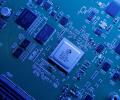
The Indian government has approved two major manufacturing initiatives worth nearly Rs 1.9 lakh crore (USD 22 billion) to expand the country's semiconductor ecosystem and scale up mobile phone production, aiming to strengthen its position as a global electronics manufacturing hub.

With Konarc, the company has moved deeper into the mass-market e2W segment.
The Finance Ministry's expenditure department has approved a substantial Rs 1.25 lakh crore outlay for India Semiconductor Mission 2.0, significantly increasing the country's investment in global chip-making ambitions and aiming to establish India as a major semiconductor hub.

Netrasemi, an Indian semiconductor start-up, has announced that its flagship AI chipset, A2000, has achieved silicon bringup and is preparing for commercial production this year. The A2000 SoC, supported by Zoho and the government's DLI programme, will enable smart vision and real-time video analytics for smart cameras and edge AI platforms.

'The Chinese military cannot advance much in Ladakh, even if they want to.' 'Similarly, in Arunachal Pradesh, they can rename a village or two, intrude here or there, but cannot do much more realistically.'

Adarsh Baal Vidyalaya is as breezy and it is earnest, discovers Deepa Gahlot.

Modi inaugurated the Semicon India 2025 in Delhi, in the presence of Chief Minister Rekha Gupta, and Union Minister of Commerce and Industry Jitin Prasada.

A day after announcing withdrawal from its chip-making JV with Indian conglomerate Vedanta, Foxconn on Tuesday said it is working on plans to apply for incentives under semiconductor and display fab programme, as the contract manufacturer pledged its commitment to India. The Taiwanese electronics manufacturing giant said it has been actively reviewing landscape for optimal partners. The comment assumes significance as Foxconn has pulled out from the $19.5 billion semiconductor JV with Vedanta.

Apple CEO Tim Cook's strategic pivot, from initial rejections to local partnerships and leveraging government policies like PLI, transformed India into a major iPhone manufacturing and export hub, now accounting for one in every four iPhones assembled globally.
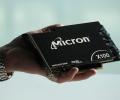
Micron Technology, a global leader in memory and storage, is considering supplying Made-in-India chips from its Gujarat plant to one of its key global clients, Apple, whose vendors assemble iPhones in the country. Micron is setting up an assembly test marking and packaging (ATMP) plant in Sanand, Gujarat. Currently, Apple vendors import chips for manufacturing iPhones. Sources in the know say the aim is to use part of the production to supply to Micron's clients in India directly.

Bharat Electronics, Reliance Industries, Mahindra & Mahindra, Larsen & Toubro, InterGlobe Aviation, ICICI Bank and UltraTech Cement were among the other major gainers. Axis Bank, Infosys, Tata Consultancy Services, Trent and Titan were the laggards.

New Delhi will substantially reduce tariffs on industrial and agricultural goods while continuing to protect sensitive sectors. Tariffs on some agricultural products that are not traditionally considered sensitive will be brought down to zero, while in the case of relatively sensitive items, duties will be reduced in a graded manner and quotas will be imposed.

The question is no longer whether the war will expand. It has. The next few days will tell us whether the war stabilises around Hormuz or whether the Strait itself becomes the trigger for a far larger rupture. What to watch for over the next 48 hours is simple: Any move by the US toward direct naval control of the Strait; any credible Iranian attempt to disrupt or mine shipping lanes and, critically, whether energy infrastructure in the Gulf continues to be targeted.If those lines are crossed in tandem, the war will no longer be containable within the region.
Is self-reliance the right approach in a mega-buck game, or better to be part of a network? asks T N Ninan.

Taiwanese electronic contract manufacturer Foxconn on Monday said it has decided to pull out of semiconductor joint venture with Indian conglomerate Vedanta, according to a statement. Foxconn said it is "working to remove the Foxconn name from what now is a fully-owned entity of Vedanta". "Foxconn has no connection to the entity and efforts to keep its original name will cause confusion for future stakeholders," Hon Hai Technology group (Foxconn) said.

Indian plants -- who plan to begin production with 28 nano metre chips -- will take two to four years to get off the ground. By that time, in the fast changing world of chip making, the global market would have shifted to 22 nm.

The first leg of Micron's semiconductor play in Sanand is crucial for the company to sprint towards India's goal of joining the chip race.

OSAT majors have concerns about India's ability to provide a stable, predictable, and lasting policy environment for years to come, which is key for making a decision in a capital-intensive business.

'The petrol lobby is very rich and strong.'
The Indian government is keen to woo major semiconductor players, but a global race to attract them to countries where there is already an ecosystem is making it difficult for India to attract the biggies in the business. On Wednesday the government decided to throw open the doors to more players to participate in its semiconductor scheme. It is now looking at not only 28 nanometre (nm) chips and below, but higher nodes like 40 nm.

This is the first Budget in my memory of Budgets over the last half a century which has embraced upfront, enthusiastically and emphatically, technology, modernity and fiscal sobriety, notes Shreekant Sambrani.

Essential and strategic items such as pharmaceuticals, semiconductors, copper, and energy products like oil, gas, coal and LNG are exempted from the 27 per cent import duty announced by the US on Wednesday, according to think tank GTRI.
The Union Cabinet on Wednesday approved a Rs 76,000 crore policy boost for semiconductor and display manufacturing ecosystem in the country in an bid to position India as a global hub for hi-tech production. Announcing the decision of the Cabinet, IT and Telecom Minister Ashwini Vaishnaw observed that electronics plays an important role in everyday life, and semiconductor chips forms a crucial part of electronics. Outlining the details of the scheme, he said the Rs 76,000 crore programme has been approved for the development of semiconductors and display manufacturing ecosystem.

Tata Group is in discussions with some major international companies, including those from Taiwan, for its foray into the semiconductor chip business. The Union government had earlier tried to bring in Taiwanese manufacturers Taiwan Semiconductor Manufacturing Company (TSMC) and United Microelectronics Corporation (UMC) for chip manufacturing in India. A person close to the development said the Tatas have now opened a separate channel for a possible tie-up. Currently, India mostly imports chips, which are fabricated and assembled to put into various applications, including automobiles, renewable power, mobile phones, televisions, and other electronic items.
US-based chipmaker Micron Technology is expecting demand for semiconductors to rise significantly in the next few years, globally and in India, as memory consumption is going up, largely driven by the widespread adoption of technologies like artificial intelligence (AI). "Memory consumption is expected to double by the end of the decade and the biggest driver in this is AI. "While it's natural to talk about compute and GPUs (graphics processing units) in the context of AI, it is not to be forgotten that the true enabler for AI is memory ... in all the AI engines that we talk about, there is a lot of need to access memory quickly," Anand Ramamoorthy, managing director, Micron Technology India, told Business Standard.
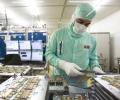
Mumbai-based Indian Semiconductor Manufacturing Company (ISMC) and Singapore-headquartered IGSS Ventures have one strategy in common: They have told the government in their application for semiconductor fabrication plants that they will export the bulk of the chips they make in India in the initial five or 10 years. The third applicant, Vedanta-Foxconn, which is also building a fab plant, has said it will concentrate on the needs of consumer electronics and mobile device markets, and earmark 80 per cent of output for domestic consumption, but has not specified its customers. Finding a viable domestic market could well be the biggest challenge for India's renewed tryst with semiconductors. Fab plants do not sell directly to end users but to intermediary chip design companies - such as Qualcomm or MediaTek.

The government has cleared US-based chip maker Micron's project to set up a semiconductor test and packaging unit worth USD 2.7 billion in the country, according to sources. The approved project is expected to create 5,000 jobs. "The project was cleared about a week back," a source said, confirming details of the project.

If the Indian government is indeed serious about reversing brain drain, it needs to put much more emphasis on research and innovation, especially in areas that will determine the future, asserts Prosenjit Datta.

Kudumbashree's new initiatives like onasadya, Onam kits and gift hampers are a huge hit.
According to the survey report, the government's move to earmark Rs 76,000 crore outlay for semiconductors and display manufacturing segment will aid their production in the country. The survey said that government intervention to boost semiconductors and display manufacturing ecosystem in the country has come at a time when the global economy is facing acute shortage of semiconductors due to severe disruptions in supply chains.
'Our plan to set up a semiconductor facility in India is back on the table'

Dalal Street minnows stole the show in 2024, giving handsome returns to investors, helped by a largely optimistic trend in the stock market and impressive retail investors' participation. Analysts attributed the positive trend in the equity markets, where the benchmark indices shattered many records this year, to robust domestic liquidity, strong fundamentals of the Indian economy, and policy continuity.

'We will start reaching out to researchers, academics, and experts on AI from top universities and companies from across the world.'
In a move to deepen manufacturing in electronics in India, the Centre is targeting 35-40 per cent value-addition through the yet-to-be launched production-linked incentive (PLI) scheme for electronics components, sources in the government

Marriott International will set up a global capability center (GCC) in Hyderabad, which will be its first such offshore unit in India and will help support Marriott's various operations across its global enterprise in 141 countries and territories. Marriott Tech Accelerator is also -- in all likelihood -- the first ever GCC from a hospitality major being set-up in India. While the company did not give details of the size of the center, senior state government officials said that the company will hire 300 people by the first quarter of the calendar year 2025.

After declining to a three-year low in FY24, the private sector investment is expected to fall further in the current financial year, India Ratings said in a research note.. The investments in the private sector are likely to plummet to below 11 per cent of the GDP in FY25, based on the trends from the latest national accounts data and company fillings, it noted.
